


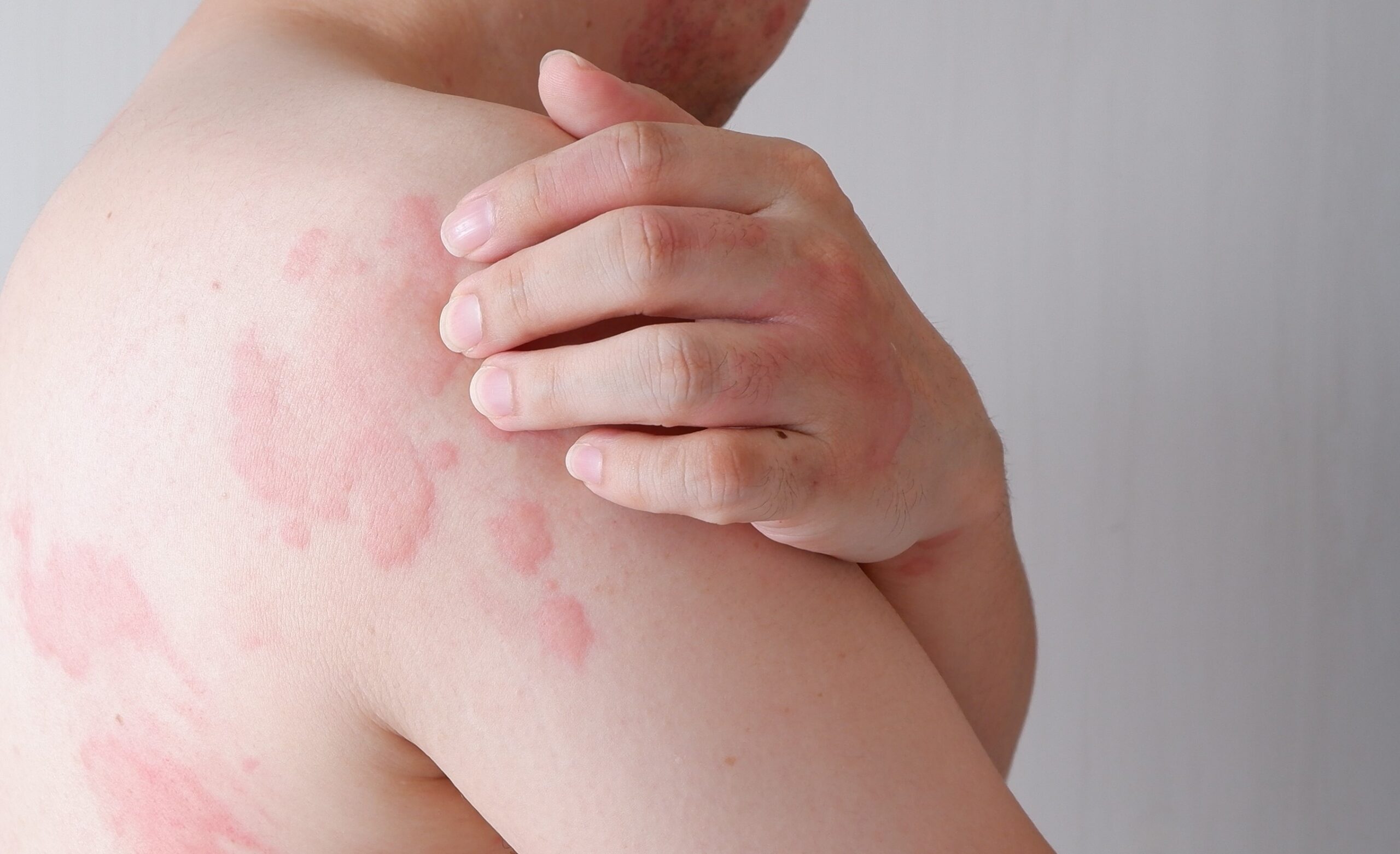
Chronic hives treatment is one of the more challenging aspects in dermatology, and if you’ve been living with persistent welts, itching, and unpredictable flares for six weeks or longer, you already know why. Chronic spontaneous urticaria (CSU) affects roughly 1 in 50 people at some point in their lives, and many patients spend months cycling through antihistamines that provide only partial relief. The good news is that modern dermatology has moved well beyond that first line of defense. At HMGS Dermatology in South Jersey, our team of nine board-certified dermatologists and five APPs works with patients across South Jersey to evaluate the full picture, and build treatment plans tailored to each individual.
If you’re ready to explore your options, contact us today.
Understanding Chronic Hives: What Sets Them Apart from Acute Reactions
Most people have experienced a brief bout of hives after an insect sting, food allergy, medication allergy, or after a viral illness. Those reactions are acute, typically resolving within a few days. Chronic spontaneous urticaria is a different condition entirely. By clinical definition, hives are considered chronic when they recur on most days for six weeks or more. That threshold matters because it shifts both the diagnostic approach and the treatment strategy considerably.
Spontaneous vs. Inducible Urticaria
Chronic urticaria falls into two broad categories. Chronic spontaneous urticaria (CSU), the more common form, occurs without an identifiable external trigger. Chronic inducible urticaria is triggered by specific physical stimuli, such as pressure, cold, heat, or exercise. Distinguishing between these types during your evaluation helps your dermatologist narrow the treatment path.
The Autoimmune Connection
Research suggests that a meaningful subset of CSU cases have an autoimmune component, meaning the immune system may be producing antibodies that activate mast cells in the skin. This is one reason why simply avoiding allergens rarely resolves the condition and why a dermatology or allergy evaluation, rather than a self-managed approach, is often the more effective route. Patients dealing with related inflammatory skin conditions, including eczema and allergic contact dermatitis, may find that overlapping immune pathways complicate the picture further, which is something our physicians are well-equipped to evaluate.
Chronic Hives Treatment Options Beyond First-Line Antihistamines
Second-generation antihistamines are the standard starting point for chronic urticaria treatment, and they work well for many patients. However, current guidelines note that doses may be escalated, and a significant number of patients remain symptomatic even at higher doses. For those individuals, there are several treatment options that a HMGS dermatology provider can discuss with you.
Dupixent (Dupilumab)
Dupilimab is an FDA-approved biologic medication indicated for the treatment of chronic spontaneous urticaria (CSU) in adults and pediatric patients aged 2 years and older whose hives are inadequately controlled by standard H1 antihistamine treatments. It targets underlying type 2 inflammation by disrupting overactive immune cell signals (interleukin-4 and interleukin-13) that contribute to the disease. HMGS Dermatology providers have hundreds of patients in South Jersey on this medication for atopic dermatitis, CSU, bullous pemphigoid, and prurigo nodularis. Trust HMGS with this biologic treatment.
Rhapsido (Remibrutinib)
Remibrutinib is an FDA-approved oral prescription medication indicated for the treatment of chronic spontaneous urticaria (CSU) in adults who remain symptomatic despite standard H1-antihistamine therapy. Approved on September 30, 2025, it is a first-of-its-kind, targeted non-steroidal therapy that serves as an oral alternative to injectable biologics.
Xolair (Omalizumab)
Omalizumab is a biologic medication FDA-approved for chronic spontaneousm urticaria in adults and adolescents 12 years and older who remain symptomatic despite antihistamine therapy. It works by targeting immunoglobulin E, a key driver of the allergic and inflammatory cascade that produces hives. In clinical practice, many patients experience a meaningful reduction in hive frequency and severity. Because biologics require careful patient selection and monitoring, this is a treatment our physicians evaluate on an individual basis.
Immunosuppressive Therapies
For patients who do not respond adequately to antihistamines or biologics, short courses of corticosteroids or longer-term immunosuppressive agents may be considered. These carry their own risk profiles and are typically reserved for more refractory cases. Our physicians at HMGS Dermatology have authored more than 620 peer-reviewed publications and train dermatology residents at Cooper Medical School of Rowan University, which means the treatment protocols guiding your care reflect the current state of the evidence, not yesterday’s standard of care. You can review our provider publications to get a sense of the depth of research our team contributes to the field.
Identifying and Addressing Underlying Factors
Some chronic hives cases are associated with underlying thyroid disease, infections, monoclonal gammopathies, or other systemic conditions. A thorough evaluation that looks beyond the skin surface can be important for patients with longstanding or treatment-resistant urticaria. This comprehensive approach is part of what we mean when we say HMGS offers an A-to-Z scope of care under one roof. You can learn more about our full range of dermatology services across South Jersey.
What to Expect During Your Chronic Hives Evaluation at HMGS Dermatology
Walking into a dermatology appointment with chronic hives can feel like trying to show someone a ghost. The welts may not be present the day of your visit. That’s completely normal, and it doesn’t limit what your provider can accomplish. A detailed patient history is often the most valuable diagnostic tool in chronic urticaria, and our physicians take the time to gather it carefully. Photos from your mobile device can also aid HMGS Dermatology providers. We often will take images from your phone and add them to your electronic chart for better documentation.
Your First Appointment
During your evaluation, your dermatologist will review the pattern, duration, and distribution of your hives, assess associated symptoms such as angioedema or systemic involvement, discuss potential triggers and lifestyle factors, and determine whether laboratory workup or referral is appropriate. This is not a one-size-fits-all checklist. It is a clinician-guided conversation.
Building Your Treatment Plan
Once your provider has a clear picture of your history and presentation, they will outline a stepwise treatment approach. For some patients, optimizing antihistamine therapy is the right next move. For others, the conversation may move quickly toward biologic or new oral bruton kinase inhibitor options or further diagnostic workup. Individual results may vary, and the timeline for improvement depends on the severity of your urticaria, your response to prior treatments, and any contributing factors identified during evaluation.
If you are also managing a related inflammatory condition such as eczema, psoriasis, prurigo nodularis, or asthma your provider will factor that into the overall treatment strategy, since immune-mediated skin diseases often benefit from a coordinated approach.
Why Choose HMGS Dermatology in South Jersey?
HMGS Dermatology has been caring for South Jersey families for generations, and the depth of that experience shows in how we approach complex conditions like chronic urticaria. Our nine board-certified dermatologists hold certifications from the American Board of Dermatology, and our team includes subspecialty training in dermatopathology and pediatric dermatology. One of our physicians, Dr. Heymann, received the 2025 Master Dermatologist Award from the American Academy of Dermatology, one of the most prestigious honors in the specialty. Our doctors serve as professors and program directors at Cooper Medical School of Rowan University, training the next generation of dermatologists. We have been recognized consistently as Top Doctors by NJ Monthly and have won more Top Doc awards in the South Jersey region than any other dermatology group. Patients in South Jersey and throughout Atlantic, Camden, and Burlington counties trust us not because we tell them to, but because their neighbors, parents, and grandparents have. Read what patients say on our patient reviews page, and then come see us for yourself.
Frequently Asked Questions About Chronic Hives Treatment
How do I know if my hives are chronic rather than acute?
Hives are generally classified as chronic when they occur on most days for six weeks or longer, or when they recur repeatedly over that period. Acute hives typically resolve within a few days and are often linked to a clear trigger. If you have been experiencing recurring hives for more than six weeks without a clear cause, a HMGS dermatology provider can help evaluate your situation and discuss appropriate next steps.
Can chronic hives go away on their own?
Research suggests that CSU does resolve in many patients over time, though the timeline varies widely. Some patients see remission within a year; others manage the condition for several years. Because the course is unpredictable and the impact on daily life can be significant, most dermatologists recommend active treatment rather than a wait-and-see approach. Your provider at HMGS can help you understand what remission rates and treatment timelines look like based on your specific presentation.
Is a biologic medication like Dupixent, Xolair, or a new oral advanced therapy, such as Rhapsido right for me?
HMGS providers utilize all FDA approved therapies for the benefit of our patients. Sometimes decisions are co-managed with help from our allergy and immunology colleagues. Whether it is appropriate for you depends on your history, prior treatment responses, and overall health profile. This is a conversation best had with a expert who can review your case thoroughly.
Does HMGS Dermatology treat children with chronic hives?
Yes. HMGS Dermatology includes 4 providers with subspecialty board certification in pediatric dermatology, and our team has extensive experience treating inflammatory skin conditions in patients of all ages. Chronic urticaria can affect children and adolescents, and our pediatric-trained providers approach treatment with age-appropriate care plans. Families throughout South Jersey trust HMGS with multiple generations of skin health, and that includes the youngest members of the household.
What should I bring to my first chronic hives appointment in South Jersey?
Bringing a symptom journal noting when hives appear, how long they last, their distribution on the body, and any potential patterns you have noticed can be genuinely useful. A list of current medications, supplements, and any prior treatments you have tried is also helpful. If you have no hives present at the time of your visit, images from your phone can be useful. You can download your patient forms in advance to make your visit more efficient. Insurance information and a list of questions for your provider are also worthwhile to have on hand.
Take the Next Step Toward Lasting Relief
If chronic hives treatment has felt like a dead end, there are more options available than you may realize. HMGS Dermatology serves patients throughout South Jersey with the kind of evidence-based, physician-led care that actually moves the needle on difficult conditions. Call to schedule your consultation, or contact us online to get started.
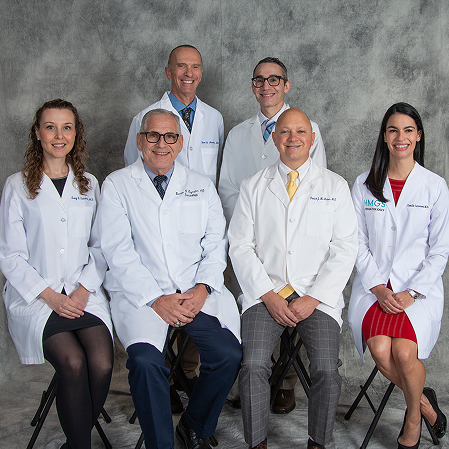
Board Certified Dermatologists and Partners
Dr. Warren Heymann, Dr. Steven Manders, Dr. Justin Green, Dr. Lacy Sommer, Dr. Patrick McMahon, and Dr. Camille Introcaso, MD
The partners of HMGS Dermatology represent some of the most highly trained, accomplished, and respected dermatologists in the region, bringing together decades of expertise across general, pediatric, surgical, and academic dermatology. With education and training from some of the nation’s top institutions—including the University of Pennsylvania, UCSF, Temple, and Rutgers—they are board-certified in multiple subspecialties such as dermatology, pediatric dermatology, and dermatopathology. Many serve as professors and program directors at Cooper Medical School of Rowan University, shaping the future of dermatology through teaching, research, and leadership. Collectively, they have held prestigious roles such as division heads, board directors, and presidents of dermatologic societies, while earning recognition through numerous “Top Doctor” awards and lifetime achievement honors. Whether advancing innovation in pediatric care, cutaneous oncology, or medical education, the HMGS partners are united by their commitment to excellence and providing the highest standard of compassionate, expert skin care to their patients.