


Photodynamic blue light therapy for actinic keratosis is one of the most well-studied, field-directed treatments available for patients with precancerous lesions. If you have been told you have actinic keratoses, had “spots frozen off”, or if you notice rough, scaly patches on sun-exposed areas of your skin, you are not alone, and you have options.
At HMGS Dermatology our team of nine board-certified dermatologists has extensive experience evaluating and treating actinic keratoses across all skin types. We are here to help you understand what this treatment is, how it works, and whether it may be right for you. To speak with our team directly, contact us today.
What Are Actinic Keratoses and Why Do They Matter?
Actinic keratoses, often called precancers or AKs, are rough, scaly patches that develop on skin that has been exposed to years of sun exposure. They most commonly appear on the face, scalp, ears, forearms, and the backs of the hands. Dermatologists consider them precancerous lesions because, left untreated, a percentage may progress to squamous cell carcinoma, a form of skin cancer.
It is worth pointing out a common misconception: many patients assume that if a patch does not hurt or bleed, it is not serious. That is not always true. Actinic keratoses are often subtle and easy to dismiss. A thorough skin evaluation by a board-certified dermatologist is the only reliable way to assess what you are dealing with.
Who Develops Actinic Keratoses?
Anyone with a history of significant sun exposure is at risk. Fair-skinned individuals, outdoor workers, and people over 50 are particularly at risk to develop AKs. Those years at the Jersey Shore add up, and we see a significant volume of patients presenting with sun damage, including actinic keratoses. If you have not had a comprehensive mole check and skin evaluation recently, it is worth scheduling one.
Certain patients develop what clinicians call “field cancerization,” where a broader area of skin, not just isolated spots, carries the cellular damage associated with AKs. This is precisely where photodynamic blue light therapy for actinic keratosis treatment becomes especially relevant.
How Photodynamic Blue Light Therapy for Actinic Keratosis Works
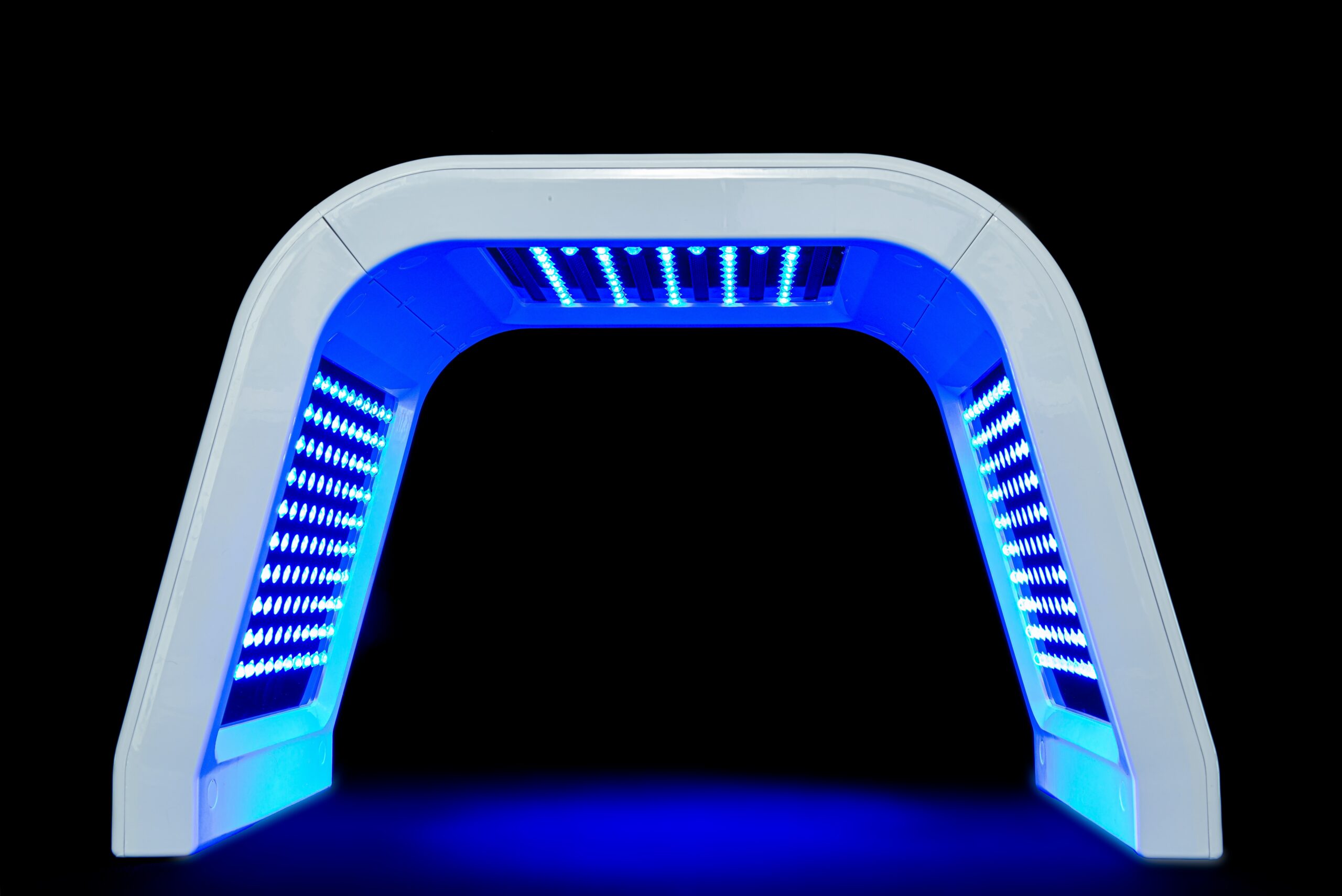
Photodynamic therapy, commonly abbreviated as PDT, combines a topical photosensitizing agent with a specific wavelength of light to target and destroy abnormal cells. For actinic keratoses, the process typically involves applying aminolevulinic acid (ALA) to the treatment area and allowing it to incubate for a designated period. The photosensitizer is selectively absorbed by the abnormal, precancerous cells. When the blue light is then applied, it activates the ALA and produces a reaction that destroys the targeted cells while leaving healthy surrounding tissue largely unaffected.
The Treatment Process Step by Step
A PDT session at HMGS Dermatology generally follows a consistent sequence. The skin is first cleaned and lightly prepared to improve the penetration of the photosensitizing agent. The ALA solution is then applied and left on the skin for an incubation period, which your provider will determine based on your specific clinical picture. After incubation, the treated area is exposed to the blue light source for a defined activation period. Patients commonly experience a warming or tingling sensation during light exposure.
Following treatment, the skin may appear red and feel sensitive, similar to a mild sunburn. Most patients experience some peeling and redness in the days following the procedure. Your HMGS provider will give you specific aftercare guidance, including sun avoidance protocols, which are especially important in the period immediately after treatment.
What the Research Suggests
Clinical research on photodynamic blue light therapy for actinic keratosis suggests it can help reduce the number and severity of AKs across a broad treatment field. The peer-reviewed literature supports PDT as a field-directed approach, meaning it addresses both visible and subclinical lesions within a defined area. Our physicians at HMGS have contributed to over 620 peer-reviewed publications, which means the literature is not something we simply read; it is something we are part of. Individual results may vary based on lesion burden, skin type, and adherence to post-treatment protocols.
Photodynamic Blue Light Therapy Actinic Keratosis: Candidacy, Results, and What to Expect
Not every patient with actinic keratoses will be a candidate for PDT, and not every AK requires the same approach. Your HMGS dermatologist will evaluate the number, distribution, and clinical characteristics of your lesions before recommending a treatment plan. For isolated, thick, or hyperkeratotic lesions, other targeted treatments may be more appropriate. For patients with a broad field of sun damage or multiple AKs, photodynamic blue light therapy is often a strong option to consider.
Am I a Good Candidate for PDT
If you have had many AKs frozen off, have used chemotherapy cream (5-fluorouracil cream), or have had skin cancer in the past, you might be an excellent candidate for PDT..
How Many Treatments Are Typically Needed?
Most patients benefit from two PDT sessions, spaced about four weeks apart. Your provider will discuss realistic expectations during your consultation. It is also important to understand that treating existing AKs does not eliminate the underlying susceptibility to new lesion development. Regular skin checks and ongoing sun protection remain essential parts of long-term management. We often discuss this within the broader context of our patients’ skin cancer prevention strategy.
Skin Health After PDT
Many patients also notice cosmetic improvement in skin texture and tone following photodynamic therapy, as the treatment may help reduce some of the visible signs of chronic sun damage. This is a meaningful secondary benefit, though it should not be the primary reason for undergoing the procedure. Patients who want to explore cosmetic dermatology options further can review the full range of cosmetic dermatology services we offer at HMGS.
Why Choose HMGS Dermatology in South Jersey?
HMGS Dermatology is not a typical private practice. Our nine board-certified dermatologists hold certifications from the American Board of Dermatology, and our physicians serve as professors and program directors for the dermatology residency program at Cooper Medical School of Rowan University. We are, quite literally, training the next generation of dermatologists in South Jersey. Our practice has contributed to over 620 peer-reviewed publications, and in 2025, Dr. Heymann received the Master Dermatologist Award from the American Academy of Dermatology, one of the most prestigious honors in the specialty.
We have treated several generations of South Jersey families across our three locations in Marlton, Camden, and Hammonton, covering Burlington, Camden, and Atlantic counties. HMGS dermatologists have won more Top Doctor awards in the South Jersey region than any other dermatology group. When you come to us with a concern about actinic keratoses or photodynamic blue light therapy, you are getting guidance rooted in genuine academic depth, clinical experience, and a real commitment to the communities we serve, including South Jersey and the surrounding Atlantic County area.
Frequently Asked Questions
Is photodynamic blue light therapy actinic keratosis treatment covered by insurance?
PDT for actinic keratosis is almost always covered by insurance when it is performed for a documented medical indication, such as the treatment of precancerous lesions. Coverage varies depending on your specific plan and the number of lesions being treated. HMGS staff will obtain prior authorization on your behalf. We encourage you to review our insurance information page or ask our team at the time of your consultation to clarify what your plan may cover.
How long does recovery take after a PDT session?
Most patients experience redness, mild swelling, and peeling for several days following photodynamic therapy. These effects reflect the treatment working and generally resolve within one to two weeks. Strict sun avoidance is required in the two days immediately following treatment. Most patients return to normal activities relatively quickly, though individual recovery timelines can differ depending on the size of the treated area and the patient’s skin sensitivity.
Can photodynamic blue light therapy be used on areas other than the face?
Yes. While the scalp, face, and ears are among the most common treatment sites, PDT may also be appropriate for actinic keratoses on the forearms and the backs of the hands and sometimes on the feet and lower legs. Your HMGS provider will assess the location, depth, and characteristics of your lesions to determine whether PDT is well-suited for the specific area involved and whether any adjunct treatments should be considered alongside it.
Are there conditions that might make someone a poor candidate for PDT?
Certain conditions may affect candidacy for photodynamic therapy, including photosensitivity disorders, use of photosensitizing medications, and pregnancy. Your HMGS provider will conduct a thorough medical history review before recommending treatment. It is important to disclose all medications and supplements at your consultation. Patients with very thick or hyperkeratotic lesions may require preparatory treatment before PDT to optimize outcomes.
How is HMGS Dermatology in South Jersey different from other dermatology practices offering PDT?
The difference comes down to depth of expertise. Our physicians train dermatology residents, have authored hundreds of peer-reviewed publications, and include a 2025 AAD Master Dermatologist Award recipient. We bring that level of academic and clinical rigor to every patient we see in South Jersey. If you want to learn more about our team and patient experiences, we encourage you to read our patient reviews.
Contact Us
If you have been diagnosed with actinic keratoses or are concerned about sun-damaged skin, photodynamic blue light therapy may be worth exploring with a board-certified dermatologist. HMGS Dermatology serves patients in South Jersey, and throughout South Jersey with the depth of expertise you would expect from a practice that trains tomorrow’s dermatologists today. Call us or contact us to schedule a consultation.
Board Certified Dermatologists and Partners
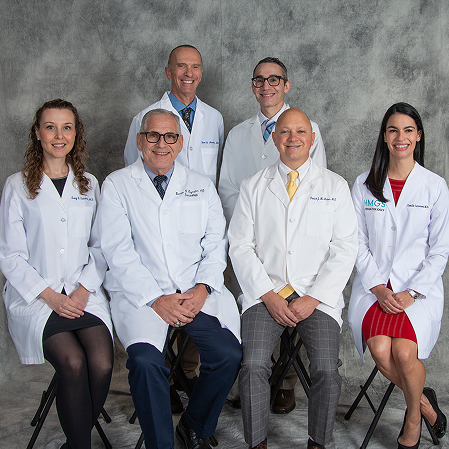
Dr. Warren Heymann, Dr. Steven Manders, Dr. Justin Green, Dr. Lacy Sommer, Dr. Patrick McMahon, and Dr. Camille Introcaso, MD
The partners of HMGS Dermatology represent some of the most highly trained, accomplished, and respected dermatologists in the region, bringing together decades of expertise across general, pediatric, surgical, and academic dermatology. With education and training from some of the nation’s top institutions—including the University of Pennsylvania, UCSF, Temple, and Rutgers—they are board-certified in multiple subspecialties such as dermatology, pediatric dermatology, and dermatopathology. Many serve as professors and program directors at Cooper Medical School of Rowan University, shaping the future of dermatology through teaching, research, and leadership. Collectively, they have held prestigious roles such as division heads, board directors, and presidents of dermatologic societies, while earning recognition through numerous “Top Doctor” awards and lifetime achievement honors. Whether advancing innovation in pediatric care, cutaneous oncology, or medical education, the HMGS partners are united by their commitment to excellence and providing the highest standard of compassionate, expert skin care to their patients.